
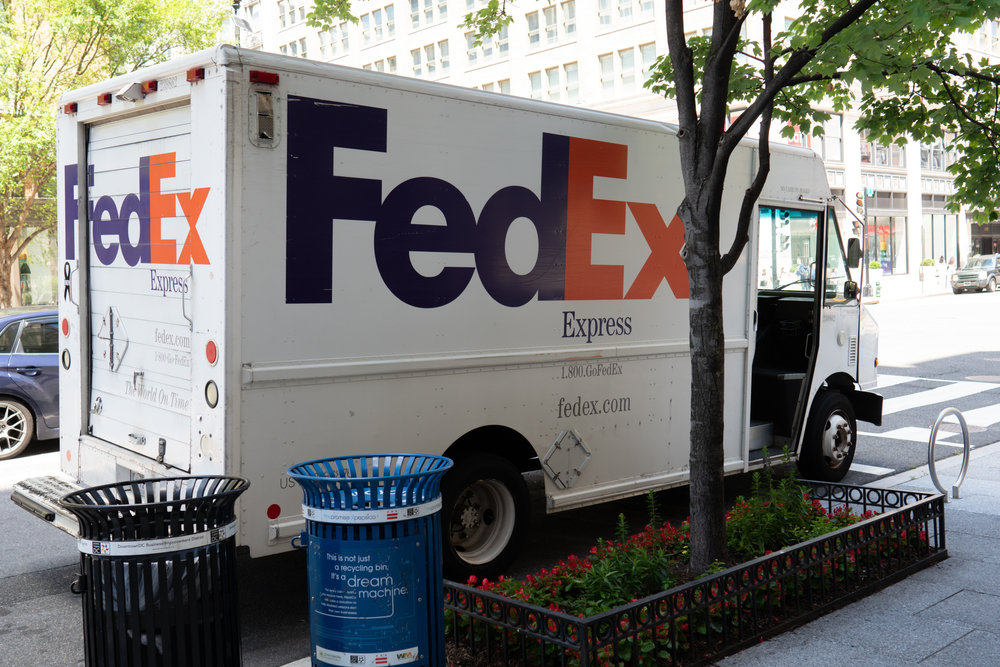
A FedEx truck looks like a single company on the road. Legally, it often is not. The driver, the truck, and the delivery route can belong to three different businesses, and the name painted on the side may be the only thing FedEx directly supplied.
That structure is not an accident of history. It shapes who is responsible after a crash, how much insurance is available, and how quickly a claim needs to move.
Does It Matter Whether a FedEx Ground or FedEx Express Truck Hit You?
Yes, and it can change who you file a claim against.
- FedEx has historically run delivery through two networks with different employment models18
- Ground-network deliveries are typically handled by contracted service providers, which are separate businesses that employ the drivers
- Express-network deliveries have generally used drivers employed directly
- The contracted company carries its own commercial insurance, and FedEx may still be a defendant depending on the degree of control
- Texas generally allows two years from the crash date to file suit
Speaking with a lawyer early helps identify which entity actually put that driver on the road.
Key Takeaways About FedEx Delivery Crash Claims
- The company that employed the driver is frequently a local contracted business, not FedEx itself.
- Contracted service providers carry commercial auto insurance, and those limits are usually far above a personal policy.
- FedEx may remain a defendant based on the control it exercises through route standards, delivery windows, scanner data, and branding requirements.
- Larger FedEx trucks fall under federal safety rules, which generate driver logs and inspection records that can be requested.
- Texas gives most injured people two years to file, under Civil Practice and Remedies Code § 16.003.
What Is the Difference Between the FedEx Ground and Express Networks?
The employment model. That single difference drives most of the legal analysis after a crash.
| Ground-network delivery | Express-network delivery | |
|---|---|---|
| Who employs the driver | A contracted service provider, an independent local business | Generally employed directly |
| Who owns the truck | Usually the contractor | Usually the company |
| Typical vehicle | Van or straight truck, often contractor-owned | Branded van or truck |
| Primary defendant | The contracted business, plus potentially FedEx | The company directly |
| Where the insurance sits | The contractor’s commercial policy | The company’s policy |
FedEx’s corporate structure has been consolidating in recent years, so the branding you see on a truck may not track these divisions the way it once did. The practical question stays the same: which business signed that driver’s paycheck, and who set the route.
Can You Still Sue FedEx If a Contractor’s Driver Caused the Crash?

Often yes. Texas courts look at the actual working relationship rather than the label in an agreement, and a company that controls how the work gets done can be responsible for it.
The relevant facts usually include who dictates delivery windows and stop counts, who requires the branded uniform and truck wrap, who supplies the scanner that tracks every package and every minute, who sets service standards the contractor must meet, and who can terminate the contract for failing them.
The same analysis applies to other branded delivery fleets, including Amazon vans and trucks. There is a second path as well. A company can be liable for its own negligence in selecting or retaining a contractor with a known poor safety record, separate from anything the driver did. That claim depends on records the company holds about the contractor’s performance history.
What Federal Rules Apply to FedEx Delivery Trucks?
It depends on the size of the truck. Vehicles above the federal weight threshold and drivers operating in interstate commerce fall under Federal Motor Carrier Safety Administration rules, which is useful because those rules generate paperwork.
That includes driver qualification files, drug and alcohol testing records, vehicle inspection and maintenance logs, and hours-of-service records. Federal hours-of-service rules cap property-carrying drivers at 11 hours of driving within a 14-hour window, and violations support claims against both the driver and the business that dispatched him.
Every interstate motor carrier also has a USDOT number, and its safety history is public through the FMCSA’s company snapshot database. Checking whether the contracted business had a documented pattern of violations is one of the first things worth doing.
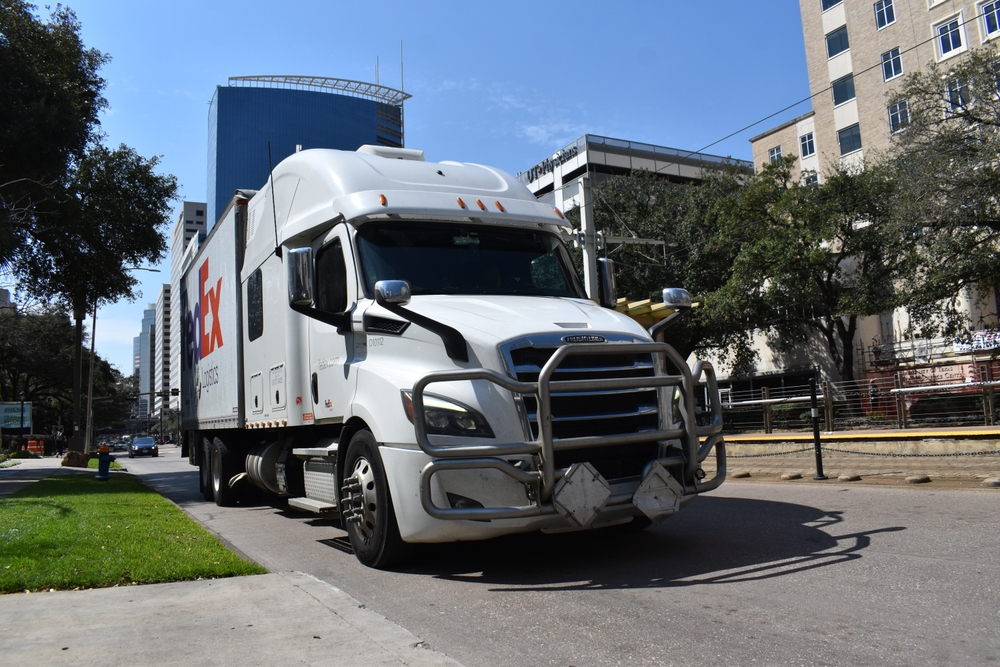
Smaller delivery vans may fall below the federal thresholds, which shifts the case toward Texas negligence law and the company’s own internal safety policies. Larger FedEx tractor-trailers are handled as truck accident claims.
Why Do These Claims Need to Move Quickly?
Because the useful evidence is electronic and short-lived. Scanner and telematics data, route assignments, and any onboard camera footage typically run on retention cycles measured in weeks or months, not years.
Federal rules require carriers to keep drivers’ duty logs for six months. Contractor agreements, safety scorecards, and internal performance records are not covered by any retention rule at all, which means they can disappear without anyone violating anything.
What Claimants Often Find Helpful
Many people find it useful to photograph the truck from several angles, including the door panel and rear, where fleet numbers and USDOT numbers usually appear. A contractor’s own business name is sometimes printed in small type near the door.
Noting the exact time also helps, since scanner data logs every stop. A precise timestamp can tie a specific route, driver, and contracted business to the location where the crash happened.
FedEx Accident Questions Answered by Attorneys
What if the police report only lists “FedEx” as the other party?
That is common and usually incomplete. Officers record what is visible on the vehicle, not the contractual structure behind it. The correct defendant is normally identified later through the USDOT number, the vehicle registration, and the contractor agreement.
Does the driver’s own insurance matter in these cases?
Rarely as the main source of recovery. Drivers working for a contracted delivery business are typically covered under that business’s commercial policy while on route, and personal auto policies generally exclude commercial use anyway.
What if a package or equipment fell from the truck and caused the crash?
That opens a different line of inquiry into loading and securement. Responsibility can fall on whoever loaded the vehicle, which is not always the driver, and on the business that set the loading procedures.
Can I bring a claim if the delivery truck was parked when it hit me?
Yes. Delivery vehicles cause a meaningful share of injuries while stopped, backing up, or blocking a lane, and those situations raise questions about hazard warnings, mirrors, spotters, and where the driver was instructed to park.
One Call Sorts Out Who You Are Actually Dealing With
The hardest part of a delivery truck claim is usually not proving what happened. It is identifying which of several businesses is responsible and reaching the insurance that sits behind them, before the scanner data and contractor records cycle out.
Our role is to trace that chain and pursue every party that shares responsibility. Consultations cost nothing, we work in English and Spanish, and we collect no fee unless we recover money for you.
Reach our San Antonio commercial vehicle accident lawyers at (210) 225-0909, day or night.
Attorney advertising. General information, not legal advice about your situation. Corporate and network structures change, so confirm current details for your case. Past results afford no assurance of similar future outcomes.