
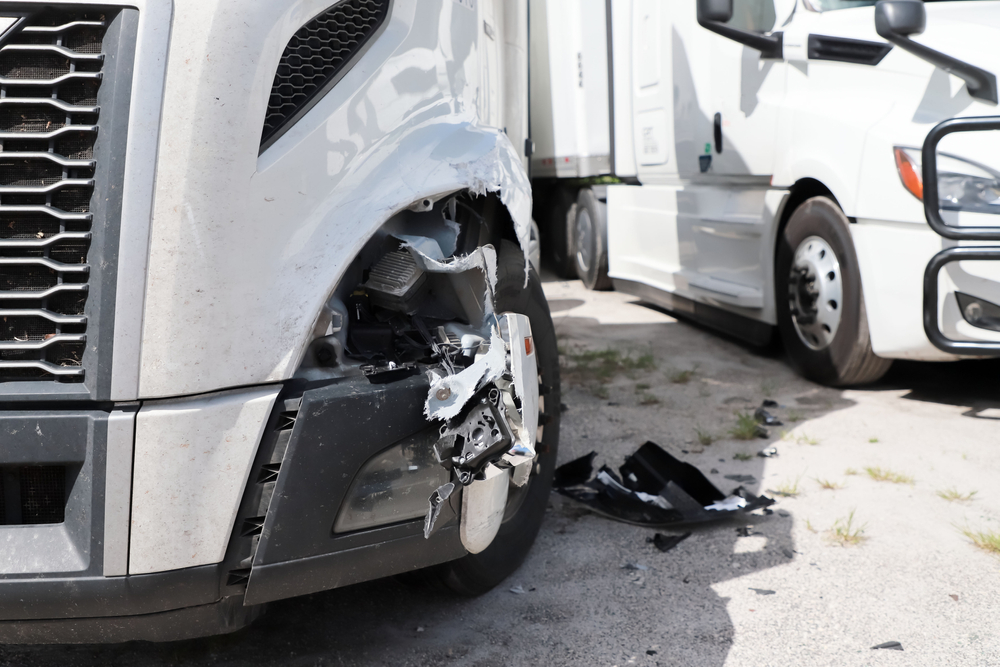
Figuring out who is liable in a truck accident is more complicated than it is after a two-car collision, because a single tractor-trailer often ties together four or five separate businesses. The driver may work for one company, the trailer may belong to another, and the freight may have been loaded by a third.
Texas law allows an injured person to pursue each party whose negligence contributed to the crash. Sorting out which ones apply typically requires records that only come out through a formal claim.
Can More Than One Party Be Liable for a Texas 18-Wheeler Accident?
Yes. Most 18-wheeler claims in Texas involve several responsible parties, not just the driver.
- The truck driver, for negligent driving
- The motor carrier, for the driver’s conduct on the job and for its own hiring, training, and supervision
- The trailer or tractor owner, when the equipment belongs to a separate leasing company
- The shipper or loading company, when cargo was loaded improperly or over the weight limit
- The maintenance contractor, when a brake or tire failure traces back to poor servicing
- A parts manufacturer, when a defect caused the failure
Each case is different, and speaking with a lawyer can help clarify which parties may apply to yours.
Key Takeaways About 18-Wheeler Liability in Texas
- Texas gives most injury claimants two years from the crash date to file suit, under Civil Practice and Remedies Code § 16.003.
- A trucking company is generally responsible for what its driver does on the job, and may also be responsible for its own decision to hire or keep that driver.
- Insurance companies typically begin investigating within hours, often before an injured person has spoken to anyone.
- Federal rules require carriers to keep drivers’ duty logs for only six months, so waiting can cost you the proof.
- Handling a multi-defendant trucking claim alone is risky, because each company will work to shift responsibility onto the others and onto you.
Key Numbers That Shape an 18-Wheeler Liability Claim
Federal regulations set several of the benchmarks these cases turn on.
- $750,000 is the minimum liability insurance most interstate carriers hauling general freight must carry, under FMCSA financial responsibility rules in 49 CFR Part 387. Hazardous materials haulers can be required to carry up to $5 million. Higher limits often sit above the minimum and only surface in litigation.
- 11 hours is the maximum a property-carrying driver may drive, within a 14-hour on-duty window, under federal hours-of-service rules. Logs showing a violation support a claim against both the driver and the carrier that dispatched him.
- 80,000 pounds is the federal gross weight ceiling for a tractor-trailer. Exceeding it points liability toward whoever loaded and dispatched the truck.
Who Can Be Sued After an 18-Wheeler Crash in Texas?
Any party whose negligence played a role. The list below covers the parties that come up most often in South Texas trucking cases.
| Potential defendant | What makes them responsible |
|---|---|
| Truck driver | Speeding, fatigue, distraction, impairment, or unsafe maneuvering |
| Motor carrier | The driver’s on-the-job conduct, plus its own hiring, training, and dispatch decisions |
| Trailer or equipment owner | Supplying defective or poorly maintained equipment |
| Shipper or loader | Overloading, unsecured cargo, or shifting freight |
| Maintenance contractor | Faulty brake, tire, or steering work |
| Parts manufacturer | A defective component that failed in normal use |
| Freight broker | Selecting a carrier with a known poor safety record |
Identifying the right defendants early matters, because each one carries separate insurance and each has its own reason to blame someone else.
When Is the Trucking Company Liable in Texas?

In most cases where the driver was working at the time. Under Texas law, an employer is generally responsible for an employee’s negligence committed within the scope of employment, which is why the carrier is usually the primary target rather than the individual driver.
Carriers can also face liability for their own conduct, separate from the driver’s. That includes putting an unqualified driver behind the wheel, skipping required background or drug screening, or ignoring a pattern of violations. These are known as negligent hiring claims against carriers, and they often produce the strongest evidence in a case.
Some carriers argue the driver was an independent contractor rather than an employee, which is a common defense worth watching for. Federal regulations limit how far that argument goes, because a carrier operating under its own authority retains safety responsibilities regardless of how the driver is classified.
What Evidence Proves Who Was Liable?
The records the trucking company controls. Most of what decides liability sits in files an injured person has no way to obtain on their own.
Attorneys typically work to secure the driver logs and inspection records, the electronic logging device data, engine control module readings, the driver qualification file, maintenance history, dispatch communications, and cargo documents. Many of these are subject to routine deletion schedules, which is why a preservation demand goes out early.
What Claimants Often Find Helpful

Many people in this situation find it useful to keep their own record while memory is fresh. Writing down the name on the truck door, the USDOT number if it was visible, and the responding agency can help, since police reports occasionally record the wrong carrier.
Keeping copies of medical visits and following through on treatment also matters. Gaps between appointments are one of the most common arguments insurers raise, regardless of why the gap happened.
18-Wheeler Liability Questions Answered by Attorneys
Can you sue a trucking company if the driver was an independent contractor?
Often yes. Federal regulations place safety duties on the carrier operating under its own authority, and Texas courts look at the actual working relationship rather than the label in a contract. Control over routes, schedules, and equipment tends to matter more than the paperwork.
What if more than one party was at fault for the crash?
Texas assigns each party a percentage of responsibility. Under § 33.001, an injured person may still recover as long as their own share is not greater than 50 percent, with the award reduced by that percentage.
Does the trucking company have to tell me who else was involved?
Not voluntarily. Broker agreements, lease arrangements, and maintenance contracts typically surface only after a claim is filed and formal discovery begins.
Can a family sue if the crash was fatal?
Yes. Texas allows a surviving spouse, children, and parents to bring a wrongful death claim, generally within two years of the date of death.
Get Clear Answers Before the Records Are Gone
Six months is not much time when a company controls the proof and has no reason to volunteer it. If a tractor-trailer hurt you or someone in your family, finding out what happened starts with someone demanding those files.
Our role is to identify every party involved and build the case against each one. Consultations are free, we work in English and Spanish, and there is no fee unless we recover money. Talk to a San Antonio 18-wheeler accident lawyer at (210) 225-0909.
Attorney advertising. This article is general information, not legal advice about your situation. Past results afford no assurance of similar future outcomes.