

Getting hit by a van with an Amazon logo on the side feels like it should make the claim simple. It usually does the opposite, because the person driving may not work for Amazon at all.
Amazon delivers through a layered structure of contracted businesses and independent drivers. Sorting out which layer applies is the first real question in the case, and it decides both who you sue and how much insurance is available.
Can You Sue Amazon If One of Its Delivery Drivers Hit You?
Often yes, though it depends on which kind of Amazon driver was behind the wheel. Amazon uses three different driver arrangements, and each one changes who you file against. Most Amazon-branded vans are operated by separate contracted companies, not Amazon itself. Amazon still controls routes, delivery windows, and in-van monitoring, which can support a claim against Amazon directly. The contracted company carries its own commercial insurance, typically well above a personal auto policy. Texas generally allows two years from the crash date to file suit.
Each case turns on its own facts, and a lawyer can help identify which parties apply to yours.
Key Takeaways About Amazon Delivery Accident Claims
- The name on the van does not establish who employs the driver.
- Amazon’s delivery partners are separate companies that carry their own commercial auto policies, often with limits far above the Texas minimum.
- Amazon may still be a defendant based on the degree of control it exercises over routes, timing, and driver monitoring.
- Delivery vans generate route data, app records, and camera footage that can be overwritten within weeks.
- Texas gives most injured people two years to file under Civil Practice and Remedies Code § 16.003.
Three Kinds of Amazon Drivers, Three Different Claims
Amazon moves packages through three arrangements, and telling them apart is the entire liability analysis.
| Driver type | Who employs them | What they drive | Who you typically claim against |
|---|---|---|---|
| Delivery partner driver | An independent local company contracted by Amazon | Branded Amazon van | The contracted company, its commercial insurer, and potentially Amazon |
| App-based independent driver | Nobody, they are self-employed | Their own personal car or SUV | The driver’s personal policy, plus any coverage the program provides |
| Amazon employee driver | Amazon directly | Amazon-owned trucks and tractor-trailers | Amazon |
The middle row is where claims most often go wrong. An unmarked personal vehicle delivering Amazon packages looks like an ordinary car accident, and many people never learn the driver was working at the time. The delivery app records that answer the question, and those records have to be requested.
Why Can Amazon Be Liable for a Contractor’s Driver?
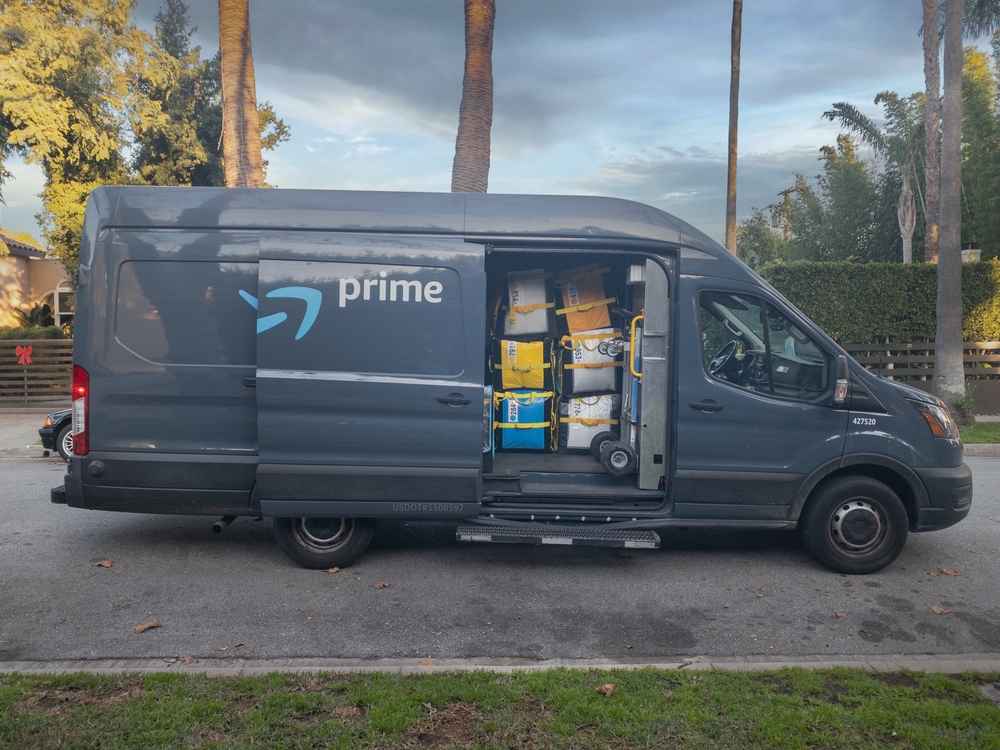
Because Texas looks at actual control rather than the label in a contract. A company that dictates how work is performed can be responsible for it, even when the paperwork says the worker belongs to someone else.
With branded delivery vans, the facts that matter include who sets the route, who sets the delivery window, who supplies the handheld device that tracks the driver, who monitors the driver through in-vehicle cameras, and who decides how many stops a driver must complete in a shift. Those details tend to point in one direction.
This is the same control question that runs through other commercial vehicle accident claims involving contracted drivers. Delivery pressure is often the heart of the case. When a driver is running behind on a route built by someone else, the resulting speeding, rolling stops, and unsafe parking are a predictable consequence of the schedule, not just individual carelessness. That argument connects the crash to the company that built the route.
What Insurance Applies to an Amazon Delivery Crash?
It depends on which arrangement the driver fell under, and the difference is substantial.
Contracted delivery companies operating branded vans typically carry commercial auto policies with limits well beyond what a personal driver carries. Amazon-owned tractor-trailers are handled like any other large truck accident claim and fall under FMCSA financial responsibility rules, which require most interstate carriers hauling general freight to maintain at least $750,000 in liability coverage.
App-based independent drivers using personal vehicles are the harder situation. Most Texas personal auto policies exclude coverage while the vehicle is being used commercially, so the driver’s own insurer may deny the claim outright. Program coverage may apply, but it is usually conditional on what the driver was doing at that exact moment.

What Evidence Matters in an Amazon Van Case?
The records the delivery company controls. Almost none of it is available to an injured person on their own.
Route assignments, delivery timestamps, handheld device data, in-van camera footage, driver schedules, and the contract between Amazon and the delivery company all bear on the case. Camera and telematics data in particular tend to be overwritten on short retention cycles.
Because of that, our attorneys send preservation demands to both the delivery company and Amazon early, before the routine deletion schedule does the work for them.
What Claimants Often Find Helpful
Many people in this position find it useful to photograph the van, including any numbers on the door, rear, or windshield, since delivery vehicles carry fleet identifiers that make tracing ownership much easier later.
It also helps to note the exact time and the block where the crash happened. Route data is time-stamped, so a precise time and location can confirm which driver and which contracted company were assigned there.
Amazon Delivery Accident Questions Answered by Attorneys
Does it matter that the van was not marked with an Amazon logo?
Not for liability. Plenty of packages move in unmarked personal vehicles through app-based delivery, and the driver is working just the same. What matters is whether the driver was on an active delivery, which the app records will show.
What if the Amazon driver left before police arrived?
The claim can usually still be built. Delivery vehicles are tracked continuously, so route and timestamp data can identify which vehicle was in a specific location at a specific minute, even without a plate number from the scene.
Can I file a claim if I was a pedestrian or cyclist?
Yes. Delivery vans stop frequently, park in travel lanes, and back up in residential streets, and pedestrians and cyclists are injured in those situations regularly. The same liability analysis applies.
Is a delivery van accident handled differently than a car accident in Texas?
In practice, yes. Commercial vehicles bring corporate defendants, larger insurance policies, defense counsel involved early, and business records that require a formal claim to obtain. The legal standard is the same, but the case is built differently.
Find Out Who Was Actually Driving That Van
The logo on the door answers almost nothing, and the companies involved have no reason to volunteer how they are connected. Route data and camera footage do not last long enough to wait on.
Our role is to identify every company behind that delivery and pursue each one that shares responsibility. Consultations are free, we work in English and Spanish, and there is no fee unless we recover money for you.
Talk to our San Antonio Amazon van and truck accident attorneys at (210) 225-0909, any hour.
Attorney advertising. General information, not legal advice about your situation. Delivery program structures and insurance terms change, so confirm current details for your case. Past results afford no assurance of similar future outcomes.