
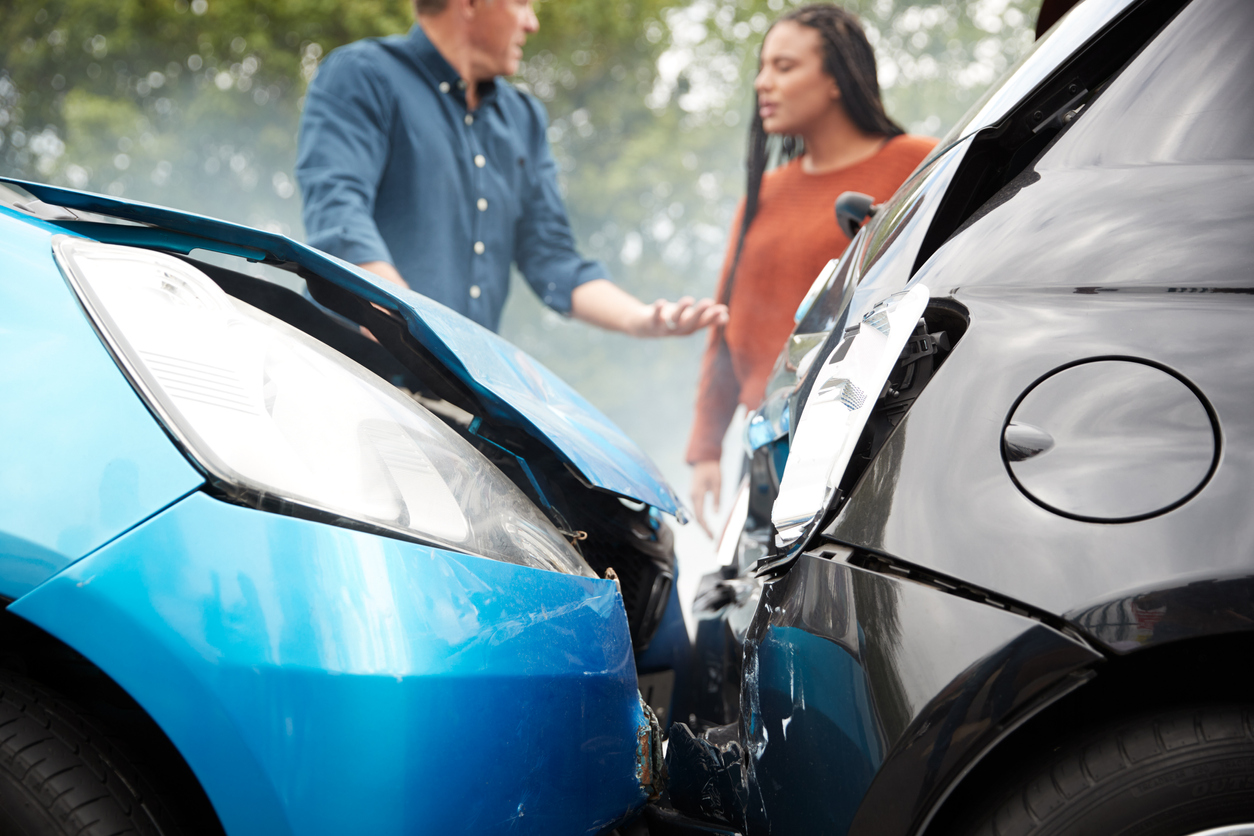
Who Decides Who Caused a Car Crash in Texas?
Insurance adjusters make the first call, and a jury makes the final one. In the days after a crash, each insurer investigates and assigns a percentage of blame to every driver, and that percentage drives the settlement offer. If the case does not settle, a Bexar County jury assigns the percentages instead. Nothing about the adjuster’s number is binding, which is why it can be challenged.
Understanding how fault is determined in a car accident matters more in Texas than in many states, because your recovery drops by exactly the percentage of blame assigned to you and disappears entirely past a threshold.
A single figure decided by someone you have never met can move a claim by tens of thousands of dollars. Knowing who sets it, what they look at, and what changes their mind is the difference between accepting a number and negotiating one.
Key Takeaways About Fault Determination in Texas
- Texas is an at-fault state, so the driver responsible for the crash pays.
- Under Texas Civil Practice and Remedies Code Section 33.001, you recover nothing if your share of responsibility is greater than 50%.
- Below that, Section 33.012 reduces your damages by your percentage of fault.
- A police officer’s opinion about fault is evidence, not a ruling, and it can be challenged.
- Texas injury suits must generally be filed within two years under Section 16.003.
Key Statistics About San Antonio Crashes
- Bexar County recorded 48,522 crashes and 215 traffic deaths in 2024, according to TxDOT crash records.
- Texas has not gone a single day without a traffic fatality since November 7, 2000, a streak TxDOT tracks publicly through its #EndTheStreakTX campaign.
- Statewide, 2024 produced 554,146 crashes and 4,150 deaths in the same data set.
What Evidence Is Used to Assign Fault?

Physical proof first, statements second. Memory is the weakest category in the file, and the parties know it.
- Vehicle damage patterns, which show angle, speed, and point of impact
- Event data recorders, the black box in most modern vehicles, capturing speed, braking, throttle, and seat belt use in the seconds before impact
- Traffic and business surveillance footage, which is usually overwritten within days
- Roadway evidence, including skid marks, debris fields, and final rest positions
- Cell phone records, where distraction is suspected
- Independent witness accounts from people with nothing at stake
- The crash report and any citations issued
Anything electronic has a short life. That is the single strongest argument for calling a lawyer in week one rather than month three.
Does the Police Report Decide Who Was at Fault?
No. It is influential and it is not the last word, and the distinction matters more than most people realize.
Under Texas Transportation Code Section 550.062, an investigating officer must file a crash report with the state within 10 days when a crash causes injury, death, or at least $1,000 in property damage to any one person. Texas courts have generally treated those reports as admissible under the public records exception to the hearsay rule.
The officer’s conclusion about fault is a different matter. Texas appellate courts have excluded officer opinions on things like driver inattention where no witness qualifications or factual basis were established. An officer who arrived after the crash did not see it happen.
Separately, Section 550.066 makes an individual’s response to certain information requested on a collision report form inadmissible in a civil trial.
So a report listing you as a contributing factor is a problem to solve, not a verdict to accept.
How Do Insurance Adjusters Assign a Fault Percentage?
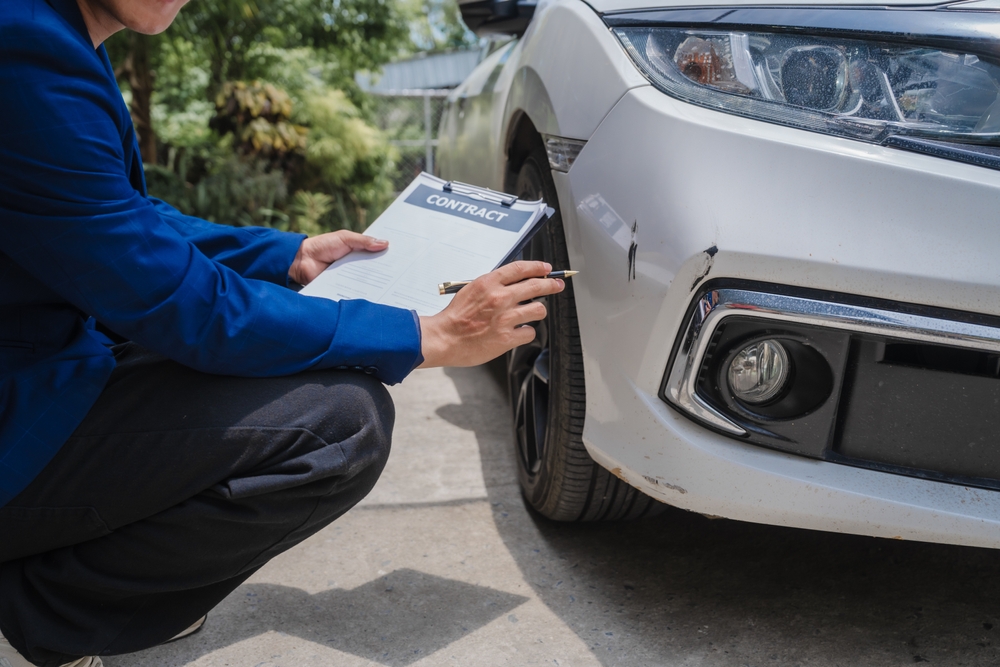
By investigating quickly and building a theory that limits what they pay. Adjusters are not neutral referees, and the percentage is a business judgment made with incomplete facts.
Common tactics worth recognizing:
The early recorded statement. Requested within days, before you know the extent of your injuries, and used later to lock you into an account made on pain medication.
The shared-fault theory. You were speeding, you could have braked sooner, you should have seen them. Every percentage point assigned to you is money off the check.
The treatment gap. Two weeks between visits becomes an argument that you were not really hurt.
The quick offer. Sent before treatment is finished, paired with a release that closes the claim permanently.
None of it is personal. It is a process built to close files economically, and it responds to evidence rather than to argument.
How Does Texas Comparative Fault Actually Work?
Your damages get cut by your percentage, and past 50% they vanish. The math is simple and the consequences are not.
| Fault assigned to you | A $200,000 claim pays |
|---|---|
| 0% | $200,000 |
| 25% | $150,000 |
| 50% | $100,000 |
| 51% | $0 |
That last row is why insurers push a shared-fault theory even in clear cases. Getting a driver to 51% is a complete defense, not just a discount. Proving otherwise means establishing the four elements of negligence and rebutting the percentage with physical evidence.
What Should You Do to Protect the Fault Evidence?
Move on the perishable things first.
- Photograph both vehicles, the roadway, traffic signals, and skid marks before anything is moved
- Get names and numbers from witnesses, since they leave within minutes
- Request the crash report and read it carefully for errors
- Note nearby businesses with cameras and tell your attorney immediately
- Seek medical care the same day and keep appointments without gaps
- Decline a recorded statement until you have talked to a lawyer
- Stay off social media about the crash and your recovery
Fault Determination Questions Answered by Attorneys
Can the fault decision be changed after the insurance company makes it?
Yes, and it happens regularly. An adjuster’s determination is an internal judgment, not a legal finding. New evidence such as black box data, video, or a reconstruction opinion can move the number, and a lawsuit puts the question to a jury instead.
What if the other driver lies about what happened?
Their account gets tested against physical evidence. Damage patterns, vehicle data, and independent witnesses frequently contradict a driver’s story, and inconsistent statements damage credibility in front of a jury.
Who is at fault in a rear-end collision in Texas?
Usually the following driver, but not automatically. Sudden unsafe lane changes, brake lights that were out, and multi-vehicle chain reactions all shift the analysis. Texas does not apply an automatic rule.
How is fault decided when nobody got a ticket?
Exactly the same way. Citations are evidence and nothing more. Plenty of clearly liable drivers are never ticketed, and the absence of one is not a defense.
A Percentage Is a Negotiation, Not a Verdict
Somewhere in a claims office, a person you have never spoken to decided how much of this was your fault. They did it in about a week, with partial information, while you were still figuring out whether you needed an MRI.
That number is not final unless you treat it as final. Physical evidence, vehicle data, and a reconstruction opinion move it, and so does the knowledge that the firm across the table actually tries cases. George Salinas Injury Lawyers builds these files for a Bexar County jury from the start.
Speak with our San Antonio car accident lawyers about your crash. The consultation is free and there is no fee unless we win. Call George Salinas Injury Lawyers at (210) 225-0909 in San Antonio or (512) 851-1004 in Austin.