
Austin’s taxi industry is smaller than it once was, but taxis still operate throughout the city, particularly around the airport, downtown hotels, convention venues, and entertainment districts. When a taxi driver causes an accident, the legal path is fundamentally different from a rideshare claim.
Unlike Uber and Lyft, which structure their driver relationships to limit corporate liability, licensed taxi companies in Austin operate as employers of their drivers. That employer relationship creates direct liability for the company when a driver’s negligence causes injuries.
George Salinas Injury Lawyers represents taxi accident victims in Austin and throughout Travis County. Our Austin office handles these cases in the local courts, and we know how Austin’s taxi regulatory framework affects your claim.
Call (512) 851-1004 for a free consultation. No fee unless we win.
Resources On This Page
- Why Is a Taxi Accident Different From a Rideshare Accident?
- Where Do Taxi Accidents Happen Most in Austin?
- How Does Austin’s Downtown Traffic Create Taxi Accident Risk?
- What Are Your Legal Rights After a Taxi Accident in Austin?
- What Compensation Is Available After an Austin Taxi Accident?
- How Long Do You Have to File an Austin Taxi Accident Claim?
- Ask George Salinas Injury Lawyers
- George Salinas Injury Lawyers Serves Austin From a Local Office
- Frequently Asked Questions About Austin Taxi Accidents
- The Same Relentless Advocacy, Now in Austin
Why Is a Taxi Accident Different From a Rideshare Accident? 
Not all passenger transportation services share the same legal responsibilities. If you have been injured in an accident, you may assume that taxi companies and rideshare apps operate under the same rules, but that is rarely the case. The distinction between a traditional taxi company and a modern rideshare platform can determine who is ultimately held responsible for your medical bills and other damages. Below is an overview of why these two types of cases require different legal strategies.
Taxi Companies Are Direct Employers of Their Drivers
Licensed taxi companies in Austin hire, train, supervise, and dispatch their drivers directly. That employment relationship is the foundation of direct employer liability. When a taxi driver employed by a licensed taxi company causes an accident while on duty, the company is liable for the driver’s negligence under the legal doctrine of respondeat superior. There is no independent contractor classification, no DSP model, and no corporate structure designed to create distance between the company and the driver.
Austin’s Taxi Franchise System
The City of Austin regulates taxi operations through a vehicle-for-hire ordinance. Information on Austin’s transportation licensing requirements is available through the City of Austin Transportation Department. Licensed taxi companies must obtain permits, meet vehicle safety standards, conduct driver background checks, and carry mandatory commercial insurance coverage.
When a company fails to comply with these requirements and an accident results, the regulatory violation supports the negligence claim against the company. An attorney investigates whether the taxi company, the specific vehicle, and the driver met all applicable Austin licensing requirements at the time of your accident.
Insurance Requirements for Austin Taxis
Austin taxi companies are required to carry commercial liability insurance at levels set by city ordinance. Those minimum levels are substantially higher than standard personal auto insurance, providing a more meaningful source of compensation for serious injuries. An attorney identifies the applicable insurance policy and pursues the full available coverage.
Where Do Taxi Accidents Happen Most in Austin?
Austin’s remaining taxi fleet is concentrated around high-demand areas where rideshare alternatives are less dominant, including Austin-Bergstrom International Airport, where taxis have designated pickup zones, downtown hotels along Congress Avenue, Red River Street, and the 2nd Street District, the 6th Street entertainment corridor and Rainey Street district, the Austin Convention Center and surrounding hotel cluster, and the University of Texas campus and neighboring areas.
The highest-risk periods for taxi accidents in Austin align with peak demand: SXSW in March generates extreme taxi and vehicle-for-hire demand across the city, as does Austin City Limits Music Festival in October and major University of Texas events. Drivers operating under time pressure during peak demand periods are more likely to make unsafe driving decisions.
How Does Austin’s Downtown Traffic Create Taxi Accident Risk?
Navigating Austin’s downtown core requires constant vigilance, but many taxi drivers face additional pressures that increase the likelihood of a crash. From narrow, congested streets to the unpredictable movement of tourists and cyclists, the risks in the city center are compounded by the commercial nature of taxi operations. Below is a look at how specific downtown traffic conditions contribute to taxi accidents and why these hazards are often foreseeable.
Late-Night Concentration Near Entertainment Districts
The 6th Street entertainment district generates enormous late-night pedestrian and vehicle traffic. Taxis picking up and dropping off passengers in this environment face congestion, double-parking, and pedestrian-heavy conditions that significantly increase accident risk. Taxi drivers who are rushing to complete fares in high-demand hours may make dangerous pullouts or fail to yield to pedestrians crossing between vehicles.
Airport Pickup Zone Congestion
Austin-Bergstrom International Airport’s taxi and vehicle-for-hire zones create a compressed environment where taxis queue, load passengers, and navigate pedestrian crossings in rapid succession. Accidents at airport pickup zones involve specific questions about airport authority jurisdiction, which an attorney evaluates alongside the standard negligence analysis.
Congress Avenue and Downtown Corridor Traffic
Congress Avenue is one of Austin’s primary downtown arteries, with high pedestrian and bicycle traffic alongside heavy vehicle flow. Taxis operating on Congress Avenue are in regular contact with cyclists, pedestrians crossing mid-block, and vehicles making turns at unprotected intersections. An attorney investigates the specific location and traffic conditions of your accident to establish the full picture of the driver’s breach of duty.
What Are Your Legal Rights After a Taxi Accident in Austin?
After a taxi accident in Austin, the process of filing a claim and dealing with aggressive insurance adjusters can feel overwhelming. However, having a clear understanding of your legal rights can significantly improve the outcome of your case. Below, we outline the protections offered by the law and explain how you can ensure your interests are defended while you focus on your physical recovery.
Filing a Claim Against the Taxi Company’s Insurance
Your primary claim runs against the taxi company’s commercial auto insurance policy. As a passenger, you have no fault in the accident and your claim is against the driver and the company for the full scope of your injuries. An attorney manages all communication with the insurer and ensures the claim reflects your actual damages.
What If You Were in Another Vehicle When the Taxi Hit You?
If a taxi collided with your vehicle, your claim runs against the taxi company’s liability insurance. The at-fault determination follows standard Texas modified comparative fault rules. An attorney investigates the cause of the crash, challenges any comparative fault arguments, and pursues the taxi company’s commercial coverage.
Claims Involving Taxi Passengers Harmed by Third-Party Drivers
When a third-party driver caused the accident while you were a passenger in a taxi, your claim runs against the third-party driver and their insurer. The taxi company may also have uninsured or underinsured motorist coverage that supplements recovery when the third-party driver’s limits are insufficient.
What Compensation Is Available After an Austin Taxi Accident?
Taxi accident injuries range from soft tissue injuries to traumatic brain injuries and fractures, depending on the speed and severity of the collision. The damages available in a Texas personal injury claim cover all medical expenses, lost wages, reduced future earning capacity, physical pain and mental anguish, disfigurement, and property damage.
Call (512) 851-1004 to discuss your Austin taxi accident with our legal team.
How Long Do You Have to File an Austin Taxi Accident Claim?
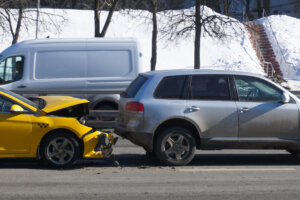
Two years from the date of the accident under Texas Civil Practice and Remedies Code §16.003. Austin taxi accident claims involve corporate defendants who begin managing their exposure immediately. An attorney sends document preservation demands to the taxi company, obtains dashcam and dispatch records, and secures the driver’s qualification file as soon as possible after being retained.
Ask George Salinas Injury Lawyers
Q: The taxi driver was driving aggressively to make more fares and rear-ended another vehicle while I was in the back seat. Do I have a claim?
A: Yes. As a taxi passenger, you have a strong claim against the driver and the taxi company. The driver’s decision to drive aggressively to increase earnings is exactly the kind of conduct that makes the employer responsible under respondeat superior. The company’s financial incentive structure, if it encourages aggressive driving to increase fares, may also be relevant to how the claim is evaluated.
Q: The taxi that hit me did not have any visible company markings. How do I find out who owns it?
A: Texas requires all vehicles to be registered, and all taxis in Austin to hold valid city permits. The vehicle’s license plate connects to a registered owner. The Austin transportation department maintains records of licensed taxi permits and their associated vehicles. An attorney investigates through both the vehicle registration system and Austin’s permitting records to identify the responsible company.
Q: I’m visiting Austin and was injured in a taxi here. Can I still file a claim in Texas even though I live in another state?
A: Yes. The accident occurred in Texas, which means Texas law applies and the claim is filed in Travis County. Your out-of-state residence does not affect your right to pursue the claim. An attorney in Austin handles the case on your behalf, and most case management can occur remotely after an initial consultation.
Q: Does it matter whether the taxi driver had previous violations or complaints on file with the city?
A: Yes. Prior violations, complaints, or failed inspections on file with the City of Austin are evidence that the taxi company knew or should have known of a safety issue with the driver or vehicle. An attorney requests those records through the public records process and uses them to support claims of negligent hiring, retention, or vehicle maintenance.
Meet Our Top-Rated Austin Taxi Accident Attorneys




George Salinas Injury Lawyers Serves Austin From a Local Office
Our Austin office at 111 Congress Avenue represents taxi accident victims and all personal injury clients in Travis County and Central Texas. Our attorneys handle cases in Austin’s local courts and understand the specific regulatory environment governing vehicle-for-hire operations in the city.
$100M+ recovered. 110+ years of combined experience. No fee until we win.
Call (512) 851-1004. Available 24/7.
Austin Personal Injury Lawyers | San Antonio Personal Injury | Austin Train Accident Lawyers
Frequently Asked Questions About Austin Taxi Accidents
Are Austin taxis required to have dashcams?
City of Austin ordinances have evolved regarding in-vehicle cameras for taxis and vehicle-for-hire operators. Whether a specific taxi had dashcam footage depends on the company’s equipment and the applicable regulations at the time. An attorney investigates whether dashcam footage exists and sends a preservation demand before the footage is overwritten.
What if the taxi company’s insurance offer seems reasonable? Do I still need a lawyer?
An offer that seems reasonable without legal analysis may still fall short of the actual value of your claim. Medical costs, future treatment needs, and non-economic damages require a complete evaluation. The consultation with George Salinas Injury Lawyers costs nothing and creates no obligation, so there is no risk in finding out whether the offer accurately reflects your losses.
Can I file a claim against the City of Austin if a city vehicle caused the accident?
Yes, but city vehicle claims follow the Texas Tort Claims Act rather than the standard personal injury process. Government entity claims have specific notice requirements and damage limitations. Notice is generally required within six months of the accident.
How is a Travis County taxi accident case handled differently from a Bexar County case?
The applicable law is the same Texas personal injury law regardless of county. The differences are procedural: Travis County courts have their own local rules, timelines, and judicial practices. Our Austin office has experience in Travis County courts specifically and handles Austin-area cases under those local practices.
The Same Relentless Advocacy, Now in Austin

Injured visitors, residents, and workers in Austin can expect the same relentless representation that George Salinas Injury Lawyers has delivered in San Antonio.
Free consultation. No fee until we win. Available 24/7.
Call (512) 851-1004. | George Salinas Injury Lawyers | 111 Congress Ave., Austin, TX 78701