

The person who hit you in that moving truck probably had no training, no commercial license, and no experience driving anything that size. That is entirely legal, and it is the reason these crashes happen the way they do.
Then comes the part almost nobody expects: a federal statute makes it difficult to hold U-Haul responsible for what its renter did. Building one of these claims means knowing exactly where that shield ends.
Free case review, 24/7, in English or Spanish. Call (210) 225-0909.
In a U-Haul crash, the claim usually runs against the renter who was driving, not against U-Haul itself. A federal law called the Graves Amendment shields rental companies from liability based on ownership alone. U-Haul can still be pursued when its own negligence contributed, such as renting out a truck with failed brakes. George Salinas Injury Lawyers handles these claims throughout Bexar County. Call (210) 225-0909.
Resources On This Page
- Why Doesn’t a Moving Truck Driver Need a Special License?
- Who Is Liable in a U-Haul Accident?
- Can You Sue U-Haul Directly After a Crash?
- What Insurance Actually Covers a U-Haul Crash?
- What Evidence Matters in a Rental Truck Case?
- How Long Do You Have to File in Texas?
- FAQ
Why Doesn’t a Moving Truck Driver Need a Special License?
Because rental trucks are deliberately built to stay below the weight threshold that triggers a commercial license requirement. Federal rules require a commercial driver’s license for vehicles rated above 26,001 pounds, and consumer moving trucks are engineered to land just underneath it.
So a customer with an ordinary Texas Class C license can rent a truck more than twenty feet long, load it heavy, and drive away with no road test, no training, and no experience. The rental counter conversation is about insurance products and drop-off locations, not about how the vehicle handles.
The consequences are predictable. Renters misjudge braking distance, take turns too tightly, clip vehicles they cannot see in blind spots, strike overpasses and drive-through canopies, and lose control on windy stretches of I-10 and Loop 1604 with a high, unbalanced load. Cargo shifting inside an improperly packed box makes all of it worse.
Who Is Liable in a U-Haul Accident?
Usually the renter who was driving. That person’s negligence is the foundation of the claim, and their conduct is what the case is proven on.
The complication is that the renter is often a private individual with modest insurance, or none that applies. So the real question becomes which other parties can be reached, and there are several possibilities:
- The renter’s employer, if the truck was rented for work. A business that has an employee move inventory or equipment can be responsible for what happens on that trip.
- U-Haul or the local dealer, but only for their own negligence, not simply for owning the truck.
- A maintenance contractor, when a brake, tire, or steering failure traces back to bad work.
- A parts manufacturer, when a component failed in normal use.
- Whoever loaded the truck, when shifting or overloaded cargo caused the loss of control.
Working out which of these applies is the substance of these cases, and it depends on records that have to be requested rather than volunteered.
Can You Sue U-Haul Directly After a Crash?
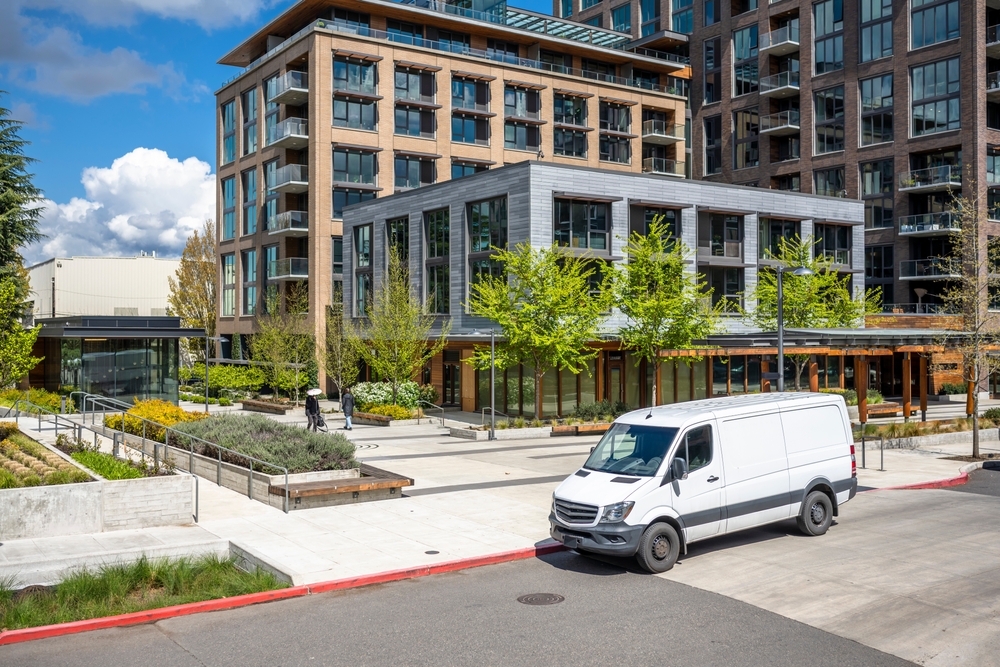
Only when U-Haul’s own conduct contributed. A federal law known as the Graves Amendment, codified at 49 U.S.C. § 30106, prevents states from holding a vehicle rental company liable purely because it owned the vehicle its customer crashed.
The protection applies when two conditions are met: the company is in the business of renting or leasing vehicles, and the company itself was not negligent and committed no criminal wrongdoing. That second condition is the whole ballgame.
Claims that survive the Graves Amendment generally fall into these categories:
- Negligent maintenance. Renting out a truck with worn brakes, bad tires, or a known mechanical defect is the rental company’s own negligence, not the renter’s.
- Negligent entrustment. Handing keys to someone visibly impaired, without a valid license, or otherwise obviously unfit to drive that vehicle.
- Failure to inspect. Skipping the inspection and turnaround process a company’s own policies require between rentals.
- Negligent instruction. Giving a renter wrong information about the truck’s capabilities or loading limits.
Establishing any of these requires the truck’s maintenance and repair history, the inspection records from the rental before yours, the rental agreement, and the dealer’s own procedures. None of that arrives without a formal demand, and maintenance records on a truck that goes back into service quickly do not stay complete forever.
What Insurance Actually Covers a U-Haul Crash?
Often less than people assume, and the gaps are the reason these claims stall. Most Texas personal auto policies do not extend to a large rented truck, so the renter’s own coverage may not respond at all.
The coverage a renter buys at the counter is optional and frequently declined. When purchased, much of it is oriented toward protecting the truck and the renter’s belongings rather than compensating a third party who was injured. Damage waivers and cargo coverage do nothing for your medical bills.
That leaves several avenues worth checking in every case:
| Possible source | When it applies |
|---|---|
| Renter’s personal auto policy | Only if it covers vehicles of that size, which many do not |
| Liability protection purchased at rental | Only if the renter bought it, and subject to its own terms |
| A business policy | When the truck was rented for commercial or work purposes |
| Your own UM/UIM coverage | Uninsured and underinsured motorist coverage on your policy, which can respond when the at-fault side has too little |
| A claim against U-Haul | When the company’s own negligence contributed |
Uninsured and underinsured motorist coverage is worth close attention in rental truck cases. Many people carry it without realizing, and it is sometimes the most substantial coverage available.
Not sure what applies to your crash? Call (210) 225-0909 and we will look at it at no cost.
What Evidence Matters in a Rental Truck Case?

Records held by the rental company, and they are time-sensitive. The truck goes back on the road within days, which means the physical condition it was in when it hit you starts disappearing immediately.
Our early requests cover the rental agreement and what coverage was declined, the truck’s full maintenance and repair history, inspection records from prior rentals, mileage and GPS data where it exists, the dealer’s turnaround procedures, and any prior complaints about that unit.
We also look at how the truck was loaded, since weight distribution in a box truck affects braking and rollover behavior far more than most drivers understand. These cases sit alongside our other commercial vehicle accident claims and our San Antonio car accident claims in how the investigation runs, even though the driver was a private citizen.
How Long Do You Have to File in Texas?
Generally two years from the date of the crash, under Texas Civil Practice and Remedies Code § 16.003. Wrongful death claims run two years from the date of death.
Texas also applies proportionate responsibility under § 33.001. You can recover as long as your share of the fault is not greater than 50 percent, with your award reduced accordingly.
The practical deadline is much shorter. A maintenance-based claim against a rental company depends on records and a vehicle condition that will not wait two years.
Get Someone Looking at the Maintenance File Now
Rental trucks are back in service within days, and the paperwork that shows what condition yours was in has no reason to stay intact. If a moving truck hit you anywhere in San Antonio, the useful window is now rather than later.
Our founder, George Salinas, is a member of the American Board of Trial Advocates, admitted only after at least 10 completed jury trials and a vote by attorneys from both sides and by judges. He also spent the start of his career at an insurance defense firm.
There is no cost to talk and no fee unless we recover money for you. Our San Antonio truck accident lawyers handle these claims alongside every other commercial vehicle case the firm takes.
Call (210) 225-0909, any hour, English or Spanish.
FAQ
Does this apply to Penske and Budget trucks too?
Yes. The same federal protection covers rental and leasing companies generally, and the same analysis applies to Penske, Budget, Ryder, Enterprise trucks, and similar rentals. The vehicles are comparable, the licensing situation is identical, and the coverage gaps look much the same.
What if the person driving was not the one who rented the truck?
That can help your claim considerably. Rental agreements restrict who may drive, and an unauthorized driver may void the coverage the renter purchased, but it can also create a claim against the person who handed over the keys.
What if the U-Haul was towing a car or trailer when it hit me?
Towing changes the analysis in your favor. Trailer weight affects braking and stability, and hitch setup, trailer loading, and whether the combination exceeded the truck’s rated towing capacity all become questions. Rental companies also have responsibilities regarding what they permit a customer to tow.
Can I still bring a claim if the renter had no insurance at all?
Often yes. Your own uninsured motorist coverage may respond, a business may be responsible if the truck was rented for work, and the renter remains personally liable even without insurance. A claim against the rental company for its own negligence does not depend on the renter’s coverage either.
What if the moving truck hit my parked car or my house?
The same framework applies. Rental trucks strike parked vehicles, garages, mailboxes, and building canopies regularly because renters misjudge height and clearance. Property damage claims work through the same coverage analysis, and injuries to anyone present are handled the same way.
Meet Our Top-Rated San Antonio Truck Accident Attorneys




Attorney advertising. Prior results depend on the facts of each case and afford no assurance of similar future outcomes. Federal law and Texas deadlines referenced here should be confirmed for your situation.