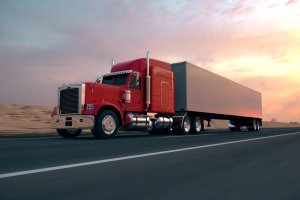
An 18-wheeler can weigh 80,000 pounds. When one hits your vehicle, the damage is nothing like a normal car crash, and neither is the legal fight that follows.
Trucking companies have rapid response teams. The moment a serious accident is reported, their investigators, lawyers, and insurance adjusters head to the scene. By the time you’re out of the emergency room, they’ve already started building their defense.
George Salinas Injury Lawyers fights on the other side of that equation. Our San Antonio truck accident lawyers have recovered a $7 million settlement in a single 18-wheeler case and a $6 million settlement in a wrongful death case involving a commercial truck. We know how trucking companies and their insurers operate, and we know how to beat them.
Call (210) 225-0909 for a free case evaluation. We’re available 24/7.
Why Are Truck Accident Cases Different From Car Accident Cases?
Truck accident cases are fundamentally more complex than standard car accident claims, and that complexity runs in the trucking company’s favor if you don’t have experienced legal help.
Who Can Be Held Liable in a San Antonio Truck Accident?
A truck accident may involve the driver, the trucking carrier, the company that loaded the cargo, the truck’s owner if different from the carrier, the maintenance contractor, and the truck manufacturer if equipment failure played a role. Each defendant may carry separate insurance coverage, and identifying every liable party is critical to a full recovery.
Federal Regulations Create a Separate Layer of Evidence
The trucking industry is regulated by the Federal Motor Carrier Safety Administration, known as the FMCSA. Those regulations govern how many hours a driver can be on the road, how cargo must be secured, how trucks must be maintained, and what records carriers must keep. A violation of any FMCSA regulation is direct evidence of negligence. An attorney who knows those regulations knows exactly where to look.
Why Does the Trucking Company Act So Quickly After an Accident?
Most large carriers have crash response protocols that activate the moment a serious accident is reported. Their team secures the truck, downloads the data, and begins gathering information before you’ve spoken to a single attorney. Time is not on your side. An attorney who moves quickly can send a legal preservation demand that forces the company to retain all physical and digital evidence.
Call (210) 225-0909 immediately after a truck accident to protect your claim.
What Evidence Matters Most in a San Antonio Truck Accident Case?
When a commercial truck is involved in a collision, the path to a successful claim relies on the quality and specificity of the evidence collected. Because large trucks are equipped with specialized technology and subject to strict federal regulations, the data available in these cases is far more complex than in a typical passenger vehicle accident. Understanding which pieces of evidence are most critical can significantly strengthen your case and help establish liability.
The Black Box and Electronic Logging Device
Commercial trucks are required to carry electronic logging devices, known as ELDs, that record hours of service, speed, braking, and other operational data. Many trucks also carry event data recorders, sometimes called black boxes. This data can show exactly how fast the truck was traveling, whether the driver braked before impact, and whether hours-of-service limits had already been violated.
This data is often overwritten within 30 days unless a preservation demand is in place. Our attorneys act immediately to ensure those records are preserved.
Driver Logs and Hours-of-Service Records
FMCSA regulations under 49 CFR Part 395 strictly limit how long a commercial truck driver can operate before mandatory rest. Fatigued driving is one of the leading causes of serious truck accidents. Log falsification is a federal violation that an attorney investigates through both official records and ELD data, which cannot be altered the way paper logs historically could be.
Cargo Securement and Load Records
Under 49 CFR Part 393, cargo must be properly secured to prevent shifting, falling, or spilling. A truck that is improperly loaded can become unstable, particularly on curves and highway interchanges. Load records, shipping manifests, and the physical evidence at the scene help establish whether a cargo issue contributed to your crash.
Truck Maintenance and Inspection Records
Federal law requires carriers to maintain records of all inspections, repairs, and maintenance under 49 CFR Part 396. Brake failures, tire blowouts, and equipment malfunctions that cause accidents often reflect maintenance violations that predate the crash by weeks or months. An attorney obtains those records through discovery and works with trucking industry experts to identify what should have been caught.
What Causes Most Truck Accidents on San Antonio’s Roads?
San Antonio sits at the intersection of I-10 and I-35, two of the busiest commercial freight corridors in the United States. According to TxDOT crash data, Bexar County records thousands of commercial vehicle crashes annually.
Loop 410 and US-90 see significant 18-wheeler traffic serving the Port San Antonio logistics hub and industrial corridors on the south and west sides of the city. Driver fatigue on long overnight hauls, distracted driving, improper lane changes on the I-10 West corridor, and inadequate braking on steep grades near the Hill Country approach are recurring causes of serious commercial vehicle crashes in this area.
What Types of Truck Accidents Does Our Firm Handle?
Jackknife Accidents
A jackknife occurs when a truck’s trailer swings out at an angle relative to the cab, creating a V or L shape that can block multiple lanes. Jackknifes are often caused by sudden braking, slippery roads, or excessive speed on curves. These accidents frequently cause multiple-vehicle collisions and severe injuries to occupants of smaller vehicles.
Underride Accidents
An underride occurs when a smaller vehicle slides under the trailer of a truck. Federal standards require rear underride guards, but side underride protection is less regulated. These accidents are among the most deadly in any category of collision.
Rollover Accidents
Trucks with high centers of gravity, particularly tankers and oversized loads, can roll over on curves, ramps, and during sudden steering maneuvers. Rollovers often cause secondary collisions and cargo spillage that creates hazards for other drivers.
Wide Turn and Blind Spot Accidents
Large trucks require significant space to complete right turns and have substantial blind spots on all four sides. Truck drivers who fail to check mirrors, signal properly, or account for vehicles alongside them cause serious accidents in urban intersections and highway merges throughout San Antonio.
What Compensation Can You Pursue After an 18-Wheeler Accident in Texas?
Truck accident injuries are often catastrophic. Traumatic brain injuries, spinal cord damage, multiple fractures, and internal organ injuries are common outcomes of collisions with vehicles that weigh forty times more than a passenger car.
The damages available include all past and future medical expenses, rehabilitation and long-term care costs, lost wages and future earning capacity, physical pain and mental anguish, disfigurement and physical impairment, and property damage including vehicle replacement.
When the trucking company’s conduct rises to the level of gross negligence, Texas law permits a claim for exemplary damages under Tex. Civ. Prac. & Rem. Code §41.003. Hours-of-service violations, knowingly operating a truck with defective equipment, and falsified safety records are examples of conduct that may support an exemplary damages claim.
How Long Do You Have to File a Truck Accident Lawsuit in Texas?
Two years from the date of the accident under Texas Civil Practice and Remedies Code §16.003. The real deadline that matters is the one that governs evidence preservation. Trucking companies are not required to keep ELD and black box data indefinitely. A legal preservation demand sent by an attorney within days of the crash can mean the difference between having the electronic evidence that proves your case and not having it at all.
Ask George Salinas Injury Lawyers
Q: The trucking company’s insurance adjuster called me the same day and seems very friendly. Should I speak with them?
A: Be cautious. Adjusters who call quickly after a serious truck accident are often gathering information to limit the claim, not to help you. Anything you say, including casual comments about how you feel or what you think happened, becomes part of the file. Decline to give a recorded statement and call (210) 225-0909 before your next contact with any insurer.
Q: The police report says the truck driver was cited for a traffic violation. Does that mean I win my case?
A: It is strong evidence but not a certainty. A citation establishes that the officer found a traffic violation, which is evidence of negligence. However, the trucking company and their insurer will challenge damages, dispute the severity of injuries, and look for any comparative fault to assign to you. Our attorneys use the citation as one piece of a larger evidentiary picture that includes the truck’s electronic data, maintenance records, and driver history.
Q: Can I sue both the truck driver and the company they work for?
A: Yes. In most cases, both the driver and the carrier are named as defendants. Under the legal doctrine of respondeat superior, an employer is liable for the negligent acts of an employee acting within the scope of employment. Carriers sometimes argue drivers were independent contractors to limit their exposure. An attorney challenges that classification when the facts support it.
Q: What if I was a passenger in another vehicle, not the driver, when the truck hit us?
A: As a passenger, you typically have no comparative fault in the accident. Your claim runs against the truck driver, the carrier, and any other liable parties without the fault-reduction that can affect driver claims. Passenger cases are often among the most straightforward to establish liability, though the damages evaluation still requires thorough documentation of your specific injuries.
George Salinas Injury Lawyers Has the Results Truck Accident Cases Demand
Truck accident cases require resources, persistence, and the ability to take a case to trial when the trucking company won’t offer fair compensation. Our results include:
$7 million in a single 18-wheeler collision involving lower back and traumatic brain injuries. $6 million in an 18-wheeler wrongful death case. $1.17 million in a knee and lower back injury case. $875,000 in two separate rear-end and sideswipe 18-wheeler collisions.
$7m
18 Wheeler Collision
Settlement
Injuries: lower back and mild TBI.
$6m
18 Wheeler Collision
Settlement (maximum policy)
Component failure; wrongful death.
$1.17m
18 Wheeler Collision
Settlement
Injuries: knee and lower back.
$875k
18 Wheeler Collision
Settlement
Rear end — injuries: lower back.
These cases were built on evidence, expert analysis, and the willingness to litigate when necessary. That is what George Gets Justice means.
$100M+ recovered. 110+ years of combined experience. No fee until we win.
Frequently Asked Questions About San Antonio Truck Accident Claims
Does it matter if the truck that hit me was an 18-wheeler versus a smaller commercial truck?
Yes. The size of the vehicle affects the severity of injuries and the applicable regulations. True 18-wheelers and other commercial motor vehicles over 10,001 pounds are subject to full FMCSA oversight, including ELD requirements, hours-of-service limits, and drug testing requirements. Smaller delivery vehicles may have lighter regulatory requirements, though the driver and employer can still be held negligent. An attorney determines which regulations apply to your specific accident.
What if the truck accident happened because of bad weather or road conditions?
Weather and road conditions are factors but do not eliminate liability. Commercial truck drivers are trained and required to adjust their speed and driving behavior to conditions. A driver who continues at highway speed in heavy rain, fog, or icy conditions may be negligent even if those conditions contributed to the crash.
Can I still file a claim if I was not wearing a seatbelt during the truck accident?
Texas law requires seatbelt use, and a defense attorney may raise your seatbelt non-use to argue your injuries were worsened by your own conduct. This is a comparative fault argument tied to damages, not liability. The truck driver’s negligence remains the primary cause of the accident. An attorney evaluates how this factor affects the specific damages in your case.
How does George Salinas Injury Lawyers investigate a truck accident?
We move immediately to secure the truck’s electronic data, issue preservation demands, and retain trucking industry experts. We obtain the driver’s complete qualification file, drug and alcohol testing records, and the carrier’s safety rating. We reconstruct the accident using physical evidence, witness accounts, and expert analysis. Every case is built as if it will go to trial, which is the only way to negotiate from strength.
Your window to preserve the evidence that wins truck accident cases is measured in days, not months. The trucking company’s team is already working. Ours should be too.
Free consultation. No fee until we win. Available 24/7.